
Certified Energy Auditor (CEA) Training Program | February 2027
Includes Multiple Live Events. The next is on 02/01/2027 at 8:00 AM (EST)
-
Register
- Early bird pricing available!
- Non-member - $2,345
- Member - $2,100
- Regular Price after 01/21/2027 12:00 AM
- Non-member - $2,445
- Member - $2,200
Overview
February 1-4, 2027
Registration Pricing
Register early to receive the standard training rate. Late registration pricing applies during the final registration period.
Registration closes 2 business days prior to training start or if course reaches capacity.
Course Description
A virtual training program, held over 4 days, 32 total hours with multiple instructors.
This training program is designed to provide attendees an in-depth and technical review of energy auditing, including water usage in a facility. Over four days, our professional instructors will guide you through the principles and practices of greatest relevance and practical value.
Program at a Glance
| Format: Virtual | Duration: 4 Days • 32 Hours |
| Credits: 3.2 CEU • 32 PDH • 6.4 AEE | Starting Price: $2,100 (AEE Member) |
Who Should Attend
The program is of greatest value to those undertaking or assessing energy auditing projects. Obtaining AEE’s CEA certification provides international credibility among energy management, sustainable and clean energy communities. Attendees of this program have included existing energy professionals, energy engineers, energy managers, facilities managers, and energy consultants.
Schedule
Daily Breaks (Days 1–4): AM Break (15 min) • Lunch Break (1 hr) • PM Break (15 min)
Please see the "My Learning Schedule" tab for schedule information.
Remote exams are scheduled on an individual basis. See the Certification Registration tab for additional instructions.
Pursuing the CEA Certification?
This training program prepares attendees to take the Certified Energy Auditor (CEA) exam. Registering for training does not register you for the certification exam — see the Certification Registration tab for full details and requirements, including the certification’s safety training and field-audit prerequisites.
What You Will Learn
- Understand the goal of Energy Audits
- The major steps in the Energy Audit process
- The different audit levels
- Plan for a successful audit
- Communicate the results of the Energy Audit effectively to the client
- Energy forms and energy unit's conversion
- Energy rate structure and benchmarking
- Analyze energy consumption for a facility
- Establish an energy balance for a facility
- Establish a consumption baseline and adjusting the baseline
- The importance of data in energy auditing process
- The different techniques to measure and analyze data
- Define the necessary information to collect before and during the field visit
- Analyze the collected data to turn data into information
- Obtain an understanding of what is really driving energy consumption
- Methodologies and tools to analyze and decide on investment projects regardless of their nature; notwithstanding, the main focus will be on energy efficiency projects
- Understand the need for economic analysis and the importance of life cycle costing to assess an energy efficiency project
- Identify which cash flows (revenue and costs) should be included in the analysis
- Apply investment decision rules such as: Simple Payback Period (SPP), Simple Return on Investment (SRI), Net Present Value (NPV), Internal Rate of Return (IRR), and Saving to Investment Ration (SIR)
- Use Interest Tables and construct formulas in Excel for various financial calculations
- Conduct Life Cycle Cost (LCC) and Free Cash Flow (FCF) analysis for energy efficiency projects
- Perform a what-if analysis to understand the potential impact on the key financial indicators
- Concepts and characteristics of energy-effective lighting design
- Identify typical lighting energy conservation opportunities
- Demonstrate lighting economics calculations and relationships
- Types and functions of HVAC systems and equipment: Chillers, Cooling Towers, Adiabatic Fluid Coolers, Pumps, Water Distribution, Condensing Water, Waterside Economizers, VRF, Split and Unitary, AHUs, Heat pipe, Heat recovery, Fans, In-Room Terminal
- Vapor Compression Cycle and HVAC efficiencies (COP, EER)
- Piping arrangements for chilled water and or refrigerant systems
- Psychrometric processes
- ASHRAE 62, Outdoor Economizers, Demand Control Ventilation, and Filtration Systems and Standards
- Identify energy efficiency measures (EEMs)
- Evaluate O&M characteristics and opportunities
- Calculate energy savings
- Investigate the existing system and determine the opportunities to improve performance
- Understand how DHW/SHW is produced, distributed and utilized
- Know the efficiency improvement opportunities available in DHW/SHW systems
- Identify potential EEMs
- Compute impacts of the EEMs
- Electrical Fundamentals
- Types of Motors
- Energy Savings Measures for Motors
- What is Power Factor and why does it matter?
- Value of Variable Speed Drives (VFDs)
- Types of Air Compressors and Energy Savings Opportunities
- Determine the appropriate energy strategy for motors and compressors
- Calculate energy savings amounts
- Building Envelope terminology
- Heat transfer mechanisms
- Sources of heat loss/gain that affect buildings heating and cooling loads
- Calculate heat loss/gain through walls
- Find and calculate R and U values
- Calculate seasonal heat loss/gain through a building
- Distinguish and classify automation and control systems
- Investigate the systems operation
- Recommend performance improvements
- Understand the various alternative energy generation technologies available for behind-the-meter applications
- Be knowledgeable with regards to the various methods to store energy, and where an Energy Auditor may suggest such a system
- Determine overall opportunity for alternative methods to generation and storage
- Types of transport
- Energy consumption, cost and efficiency
- Improvements in systems
- Evaluate transport system performance and efficiency
- Discuss and recommend a transport energy strategy
Rich Costello, PE, CEM, CEA
Instructor
Mr. Costello is the President of Acela Energy Group, an energy consulting group specializing in energy procurement, load management, as well as, energy conservation training, auditing, and on-site wind & solar generation projects. Rich has extensive experience in the fields of load management, utility services, energy conservation, as well as power, natural gas, and tariff related negotiations and agreements.
Mr. Costello is also President of Acela Thermal Energy (ATE), a Refrigeration and HVAC energy service division of Acela Energy Group specializing in mechanical & thermal energy conservation measures as well as implementation of Ecopilot AI on building HVAC Control Systems. ATE provides energy services to Commercial, Governmental, Retail, Institutional, and Industrial Customers, as well as ESCO’s and Utilities across the country.
Rich is a registered professional engineer and was previously the Power Supply Manager for the Massachusetts Bay Transportation Authority, as well as a Senior Engineer in the Load Management Department of Boston Edison (Eversource). He holds a M.S. in Engineering Management from Western New England College and a B.S. in Mechanical Engineering from Northeastern University. Mr. Costello also conducts the following Energy Certification Courses nationwide for the Association of Energy Engineers: CEM, CEA, BEP, & CEP. Rich was the International President of the Association for the Year 2000 and received the 2003 Energy Professional of the Year Award from the organization. In 2006, Richard was inducted into the Energy Managers Hall of Fame.
Fredric Goldner, CEM, CEA
Instructor
Fred has over 30 years' experience and is a nationally recognized expert in the field of energy auditing and management. He is currently involved in a wide variety of projects, including facility audits, use analyses, research, and energy master planning and program design. He is a nationally recognized expert in the area of energy auditing and management and has lead audits and audit teams for hundreds of facilities totaling tens of millions square feet. Over eight years, he conducted extensive research in the area of multifamily building DHW loads and systems. As a result, he authored a new set of DHW sizing guidelines included in the ASHRAE Handbook and the ASPE DWH Design Manual. He is also an adjunct professor at the Center for Energy Policy & Research at NYIT. Over the past thirty years, Fred has taught over 13,000 professionals and trade persons across the globe, in addition to co-authoring several publications and books, including ASHRAE's Energy Efficiency Guide for Existing Commercial Buildings: The Business Case for Building Owners and Managers. Fred served as International President of AEE in 2003, has received many awards for his work, and was inducted into the Energy Managers Hall of Fame in 2007 for his lifetime of achievement in promoting the practices and principles of Energy Management.
Fred sits on numerous engineering, and industry committees and boards, including AEEs Certified Energy Manager Board and is one of the authors of the recently released ASHRAE Energy Audit Standard. Fred also remains an active member of the New York Chapter AEE Board of Directors. Visit emra.com to learn more.
Certification Registration
Certification Program
This training program prepares attendees to take the Certified Energy Auditor (CEA) exam. Please review the requirements for certification on the Becoming a CEA page. A separate certification and application fee applies.
Training Registration Does Not Register You for the Certification Exam
Registering for the training does NOT register you for the certification exam. To take the exam, you must register for the exam and pay a separate fee.
Submit Your Certification Application Early
Attendees are encouraged to complete a certification application 4 weeks prior to taking the exam.
Safety Training & Field Experience Requirement
Candidates are required to verify completion of a minimum of 2 hours of Safety Training within the last three years and participation in five commercial audits within the last three years. Two of the audits are a minimum of 10,000 sq. ft. Also, the audits have been of at least two different building types.
While we do not endorse specific providers, any general workplace safety training that covers hazard identification, mitigation, and safe work practices should fulfill the requirement. Many candidates have successfully completed options such as OSHA 10 or 30-hour courses, or equivalent workplace safety programs.
After You Apply
After you submit the certification application, you will receive an email confirmation letter from AEE within 4 weeks.
Any additional questions about the CEA exam, certification eligibility, scheduling, or the application process can be directed to our CEA Certification Director, Francine Seskin, at [email protected].
Certification Resources
Need Help With Certification?
Contact Francine Seskin at [email protected].
Key:
 Complete
 Next
Next Failed
 Available
 Locked
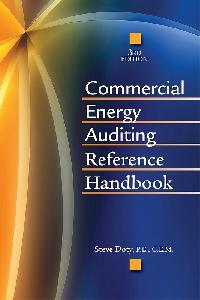
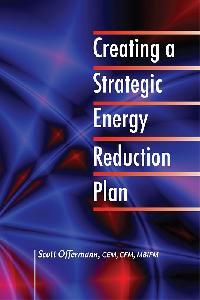
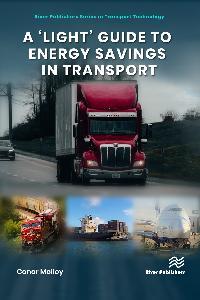
Suggested Reference Books
The following books are suggested reference books and printed copies are available through the AEE Bookstore. AEE members receive a 15% discount on printed books.
Reference Books Are Optional
Reference books are not required and are intended to help prepare for a training course and exam.
Digital Books Through the AEE eLibrary
Digital copies of these books are available through the AEE eLibrary, which is a great resource for accessing searchable content as well as highlighting and taking notes. The eLibrary is available to AEE members for the low discounted price of $50 per year. Digital books cannot be printed or accessed during the certification exam. If you’re an AEE member, add the eLibrary subscription to your membership here. If you’re not a member, join AEE here and add the eLibrary subscription to your membership.
Visit AEE eLibrary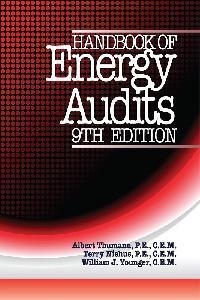
Transfer & Cancellation Policy
The following terms and conditions apply to Participants who register for training programs with the Association of Energy Engineers, Inc. (AEE). By registering for a course, you agree to these terms and conditions.
Contact the AEE Training Department
Transfer, substitution, and cancellation requests must be submitted to [email protected].
Transfer Policy
Virtual / Online
- Registration fees can be transferred to another public course offering.
- Registration can be substituted with another person who is interested in taking the course; any cost increase differences plus associated transfer fees must be paid for by the registrant — AEE will not refund fee transfer cost differentials.
- Transfer options expire one year from the original registration order date.
- Registrants who request a refund or transfer after the course start date must submit supporting documentation of extenuating circumstances preventing attendance – including first day no show. All documentation will be evaluated and the decision will be communicated in writing.
- Registrants who fail to provide supporting documentation of extenuating circumstances preventing attendance are ineligible for a refund or transfer.
- Registrants who request a refund or transfer before the course start date must submit an email request to [email protected] 14 days before the course’s start date.
- There is a $200 transfer fee.
Cancellation Policy
Virtual / Online
- Registrants who cancel 21 days or more before the start date are eligible for a refund minus a $200 cancellation fee.
- Registrants who cancel 20 days or less before the start date, or who are no-shows, are ineligible for a refund.
Changes Outside of AEE's Control
If there are changes to a training program that are outside of AEE’s control (including, but not limited to, instructor illness, acts of terrorism, acts of God, war, civil disturbances, declaration of national emergency, accidents or labor disputes, fire, flood, storms etc.), participants will be notified as soon as possible, and AEE’s liability will be limited to the reimbursement of the training program registration fee.